+92 3218447030
aqua.hygienic@gmail.com
Improve water quality across your property with a centralized filtration system designed around your source water, building requirements, and daily water demand.
Aqua Hygienic provides Whole Building Water Filtration Systems for residential and commercial properties where water needs to be treated centrally before being distributed to taps, bathrooms, kitchens, appliances, and other points of use.
Instead of relying only on individual filters at separate outlets, a point-of-entry water filtration system treats the incoming water supply at a central location. The filtration stages can then be selected according to the condition of the source water and the requirements of the property.
A Whole Building Water Filtration System is a centralized water filtration system installed on the main incoming water supply. Its purpose is to improve water quality before water is distributed throughout the building.
Depending on the source-water condition and selected treatment configuration, a system may incorporate sediment filtration, activated carbon filtration, water softening, or other suitable treatment stages.
This centralized approach is useful for properties where filtration is required at multiple points rather than at only one drinking-water outlet.
A properly selected system can help address common water-quality concerns throughout the property:
The correct combination should be determined from the actual water quality rather than using the same configuration for every property.
Water enters the filtration system before reaching the building’s internal distribution network. It then passes through the treatment stages selected for the particular application.
Water enters from the property’s main source or supply line.
A sediment filtration stage can capture suspended particles such as dirt, rust, sand, and other visible matter.
Additional treatment is selected according to the raw-water condition. This may include activated carbon filtration for chlorine, taste and odour concerns, or water softening where hardness and scale are significant issues.
After treatment, water continues into the property’s plumbing network for use at the relevant taps, bathrooms, kitchens, fixtures, appliances, and other outlets.
The exact filtration sequence should be based on source water quality, building demand, flow requirements, pressure conditions, and the intended use of the treated water.
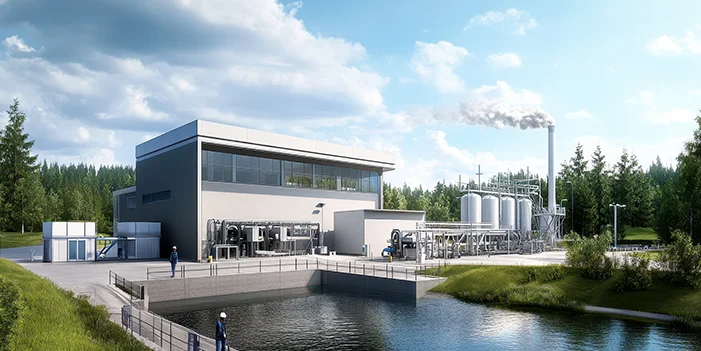
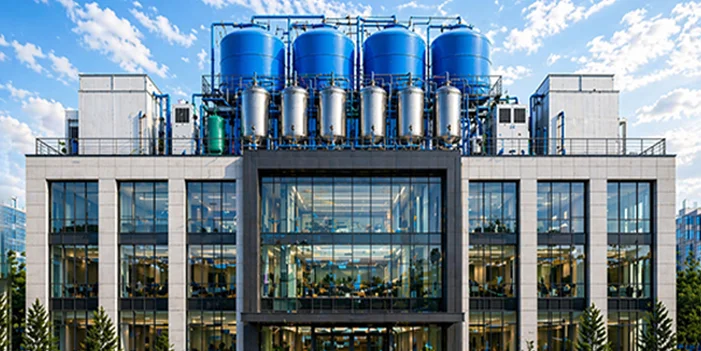
Because filtration takes place near the point of entry, the system can improve the quality of water supplied across the building instead of treating only a single tap.
Sediment filtration helps remove suspended particles before they continue through internal plumbing and reach fixtures or appliances.
Where activated carbon is included in the treatment configuration, it can help reduce chlorine and improve undesirable taste and odour associated with the incoming water supply.
If testing identifies hardness as a concern, a water softening system can form part of the overall building water treatment setup. Reducing hardness can help control scale formation in plumbing fixtures and water-using equipment.
A point-of-entry configuration provides a practical alternative to installing separate general-purpose filtration systems at numerous outlets.
There is no single filtration configuration suitable for every building.
Two properties can have very different treatment requirements because water quality can vary according to source, location, storage conditions, plumbing, and intended use. For this reason, Aqua Hygienic approaches whole building filtration as a water treatment system, rather than simply adding filters without considering the incoming water.
A system may include:
Used as an initial filtration stage to capture suspended particles such as sand, silt, rust, and other particulate matter.
Activated carbon can be used where chlorine, taste, odour, or certain organic contaminants are a concern.
Where hard water is identified, softening can be incorporated to reduce hardness minerals responsible for scale formation.
Some source-water conditions may require treatment beyond conventional sediment, carbon, or softening stages. The appropriate process should be selected only after understanding the water quality and intended application.
A Building Water Filtration System can be considered wherever water needs to be treated centrally before distribution across multiple outlets.
Typical applications may include:
For commercial applications, system selection should account for usage patterns and peak demand because several outlets may require water simultaneously.
Both approaches serve useful purposes, but they treat water at different locations.
Whole Building / Point-of-Entry Filtration:
Treats the incoming water before it is distributed through the property. It is appropriate when broader water-quality improvement is required across multiple outlets.
Point-of-Use Filtration:
Treats water at a specific outlet, such as a kitchen or drinking-water tap. It is useful when treatment is required only for a particular application.
In some properties, the two approaches can complement each other. A centralized system may address general building-water concerns, while a dedicated drinking-water treatment system can provide additional treatment at the kitchen or another drinking-water point where required.
Choosing a Whole Building Water Filtration System should begin with the water and the property—not with a predetermined filter configuration.
Identify whether the water comes from a municipal supply, bore or groundwater source, tanker, or another source. Different sources can present different treatment requirements.
Where appropriate, water testing can help identify issues such as sediment, hardness, TDS, chlorine, or other parameters relevant to system selection.
The system needs to accommodate the amount of water used within the property, particularly when several outlets operate simultaneously.
A filtration system should be sized with the building’s expected flow demand in mind. An undersized system can restrict water delivery when demand increases.
Filtration equipment creates resistance to water flow, so pressure conditions should be considered when designing and sizing the installation.
The right configuration depends on what needs to be addressed. Sediment, chlorine, hardness, taste and odour, and drinking-water purification are different treatment objectives and may require different technologies.
Filter media and other treatment components require periodic inspection, servicing, or replacement. Maintenance requirements depend on the system configuration, water quality, and usage.
Commercial buildings often have different requirements from individual homes. Higher water demand, simultaneous use at multiple outlets, operating schedules, and source-water conditions can all affect system selection.
A Commercial Water Filtration System therefore needs to be evaluated according to actual building demand rather than simply installing a larger residential filter.
Aqua Hygienic can assess the application and recommend an appropriate filtration approach based on available water information, intended use, and site requirements.
A centralized filtration system needs to do more than contain the right filtration media. It also needs to handle the building’s water demand without unnecessarily restricting normal supply.
System sizing can depend on:
These factors are particularly important in larger homes and commercial buildings where several taps, washrooms, or other water-consuming fixtures may operate at the same time.
Routine maintenance helps the filtration system continue operating as intended.
Maintenance may involve inspecting or replacing sediment filters, servicing control components, replacing or regenerating treatment media where applicable, and checking overall system performance.
There is no universal replacement schedule for every installation. Service intervals depend on factors such as incoming water quality, consumption, filter type, media capacity, and system configuration.
Aqua Hygienic also provides after-sales parts and services for water treatment systems where applicable.
Aqua Hygienic provides water filtration and treatment solutions for homes, businesses, and other properties in Pakistan.
Rather than treating every property as having the same water problem, the filtration approach should reflect the actual application. Factors such as raw-water quality, filtration objective, water demand, flow requirements, and installation conditions all influence system selection.
Whether the main concern is sediment, chlorine, hard water, general water-quality improvement, or a combination of issues, the first step is to understand what the incoming water actually requires.
A centralized filtration system works best when it is selected around the water entering your property and the amount of water your building actually uses.
Share your raw-water quality, installation purpose, location, and water requirements with Aqua Hygienic to discuss a suitable Whole Building Water Filtration System.
A Whole Building Water Filtration System treats incoming water at a central point before it is distributed throughout the property. Depending on the configuration, it can address sediment, chlorine, hardness, taste, odour, and other relevant water-quality concerns.
Whole building filtration treats water centrally for multiple outlets. Drinking-water filtration is generally installed at a specific point of use and can provide additional treatment for water intended for consumption.
A conventional sediment or carbon filter does not soften water. If hardness is a concern, the system needs an appropriate water softening stage or another treatment method selected for the water conditions.
Activated carbon filtration can help reduce chlorine when the correct carbon media, system configuration, and operating conditions are used.
Start with the source water and the problem you need to solve. Water quality, sediment levels, hardness, chlorine, TDS, intended use, flow demand, and other site conditions can all influence treatment selection. Water testing may be recommended where the water condition is uncertain.
Any filtration equipment can introduce some pressure loss. Proper system sizing, filter selection, plumbing design, and maintenance help manage pressure while meeting the required flow demand.
WhatsApp us